




Don’t Waste Busy Season: The Acquisition Strategy Most HVAC Contractors Miss
Every spring and summer, HVAC contractors shift into execution mode. Trucks roll, phones ring, technicians run wall‑to‑wall calls. The board fills up...
3 min read

Many HVAC contractors are expanding into electrical services to diversify revenue. But HVAC membership programs and service agreements may offer a simpler path to recurring revenue and stronger customer retention.
Electrification is rapidly transforming the home services industry. Industry forecasts point to an annual shortfall on the order of tens of thousands of electricians over the next decade as electrification accelerates. Heat pump adoption, EV charging infrastructure, data centers, and grid modernization are all increasing demand for electrical work.
As a result, many HVAC contractors are exploring new HVAC contractor growth strategies, including launching electrical departments or forming partnerships with electricians.
On paper, the move makes sense:
Heat pumps often require electrical panel upgrades
EV chargers create new installation demand
Homeowners prefer bundled home service providers
Cross-trade work can increase average ticket size
But before launching a new trade line, contractors should ask a critical question: Does adding electrical services increase profitability — or simply add operational complexity?
For many HVAC companies, the real opportunity lies in strengthening HVAC recurring revenue.
Adding electrical services isn’t just expanding your offerings. It’s entering a new trade with its own operational challenges.
Electrical departments often require:
At a time when the industry already faces a shortage of electricians, recruiting licensed professionals is both competitive and expensive.
For many HVAC contractors, this means entering an entirely new labor market.
Electrical work also introduces additional regulatory requirements, including:
Compared to HVAC maintenance and repair work, electrical installations often carry greater regulatory and liability exposure.
Most established HVAC companies already operate with overhead often in the 20–35% range, depending on company size and structure.
Launching a new electrical division can require:
Without significant scale, adding a new trade line often increases overhead before profitability stabilizes.
For contractors focused on sustainable growth, there may be a simpler path.
When contractors pursue diversification, the underlying objective is rarely about adding services.
The real goals are:
All of these outcomes are driven by one thing: Recurring revenue.
Instead of launching a new trade, many contractors focus on building stronger HVAC membership programs and service agreements.
An HVAC membership program — often called a service agreement or maintenance plan — is one of the most effective ways contractors generate recurring revenue.
In a typical program, homeowners pay monthly or annually in exchange for benefits such as:
For contractors, this creates predictable HVAC recurring revenue while using the technicians, trucks, and licenses already in place.
No new trade.
No new regulatory requirements.
No additional insurance class.
Just better use of your existing capacity.
Well-run HVAC membership programs often produce strong results.
Many contractors report:
Membership customers tend to maintain their systems more consistently, approve repairs faster, and stay loyal to the contractor servicing their home.
That drives significantly higher customer lifetime value (LTV).
Customer retention is one of the most powerful drivers of profitability in the HVAC industry.
As marketing costs rise and competition increases, companies that retain customers longer gain a major advantage.
A strong HVAC customer retention strategy built around membership programs can create:
For companies looking to build long-term value, recurring revenue models can often be more impactful than expanding into additional service lines.
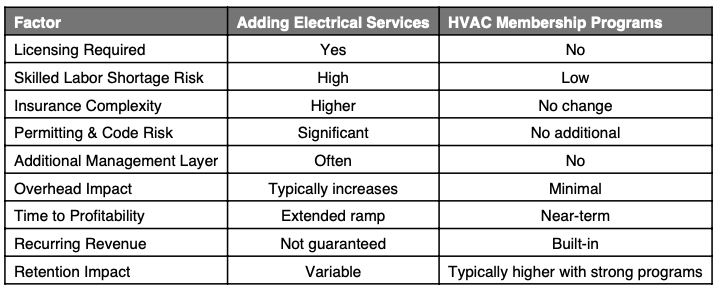
Diversification can be valuable. But diversification without operational strain is often the smarter strategy.
Electrification will continue to reshape the home services industry, and for some contractors, adding electrical services may make sense.
But for many HVAC companies, the most effective growth strategy isn’t adding complexity. It’s strengthening the foundation of the business.
Before launching a second trade, contractors should ask: Have we fully optimized our HVAC recurring revenue model?
The most resilient HVAC companies aren’t necessarily the ones offering the most services. They’re the ones building the most stable revenue.
SmartAC empowers HVAC service providers with smart monitoring, real-time analytics, and a seamless homeowner engagement experience designed to fuel long-term business growth. Book a demo or explore the platform to see what it can do for your business.
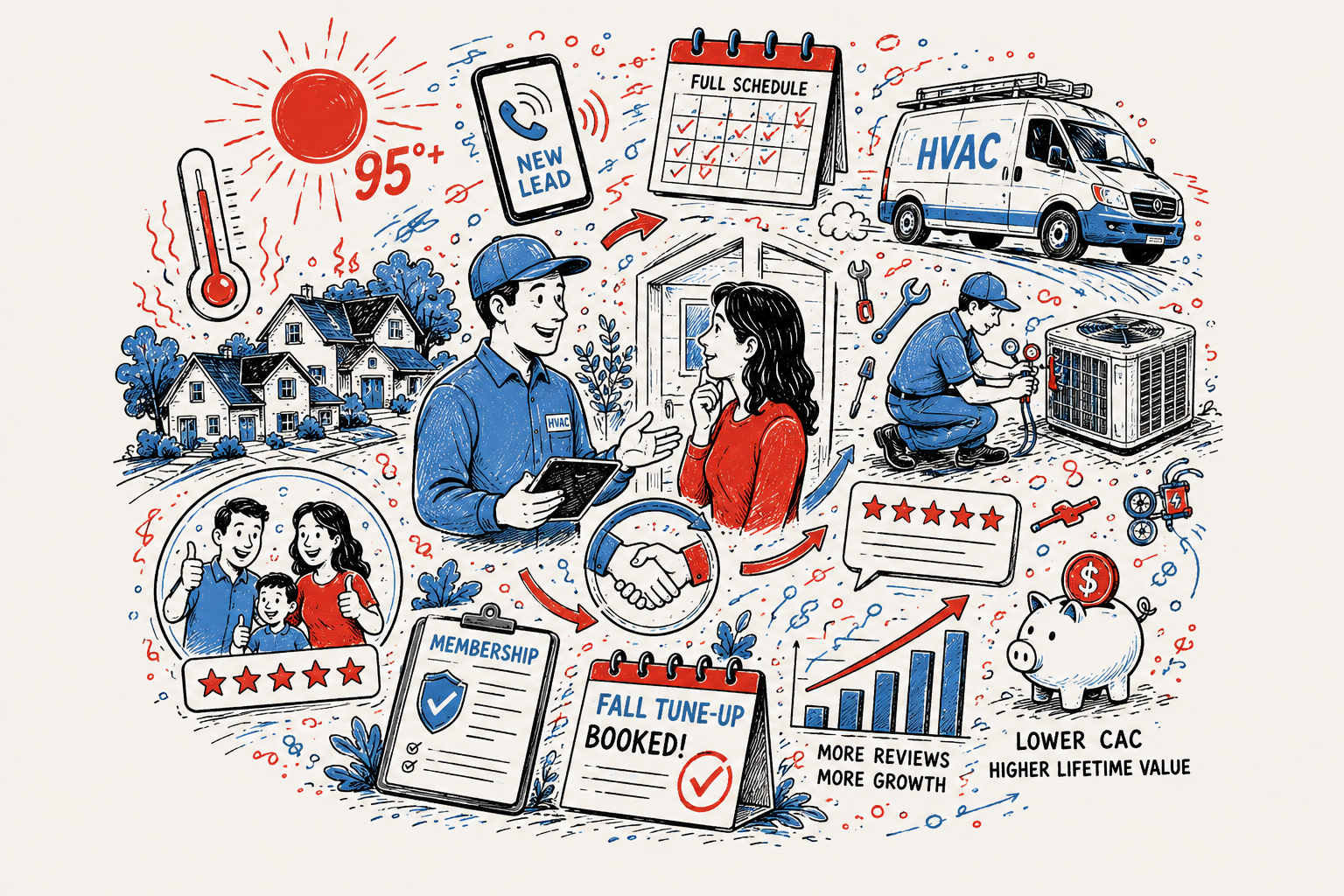
Every spring and summer, HVAC contractors shift into execution mode. Trucks roll, phones ring, technicians run wall‑to‑wall calls. The board fills up...
HOUSTON, Feb. 11, 2026 /PRNewswire/ -- SmartAC, the premier B2B SaaS platform providing smart monitoring, analytics, and an end-to-end customer...

It was the worst kind of slow season, the kind with no end in sight. Denver hadn't seen a winter like this in over a century. Record-breaking warmth....