



Don’t Waste Busy Season: The Acquisition Strategy Most HVAC Contractors Miss
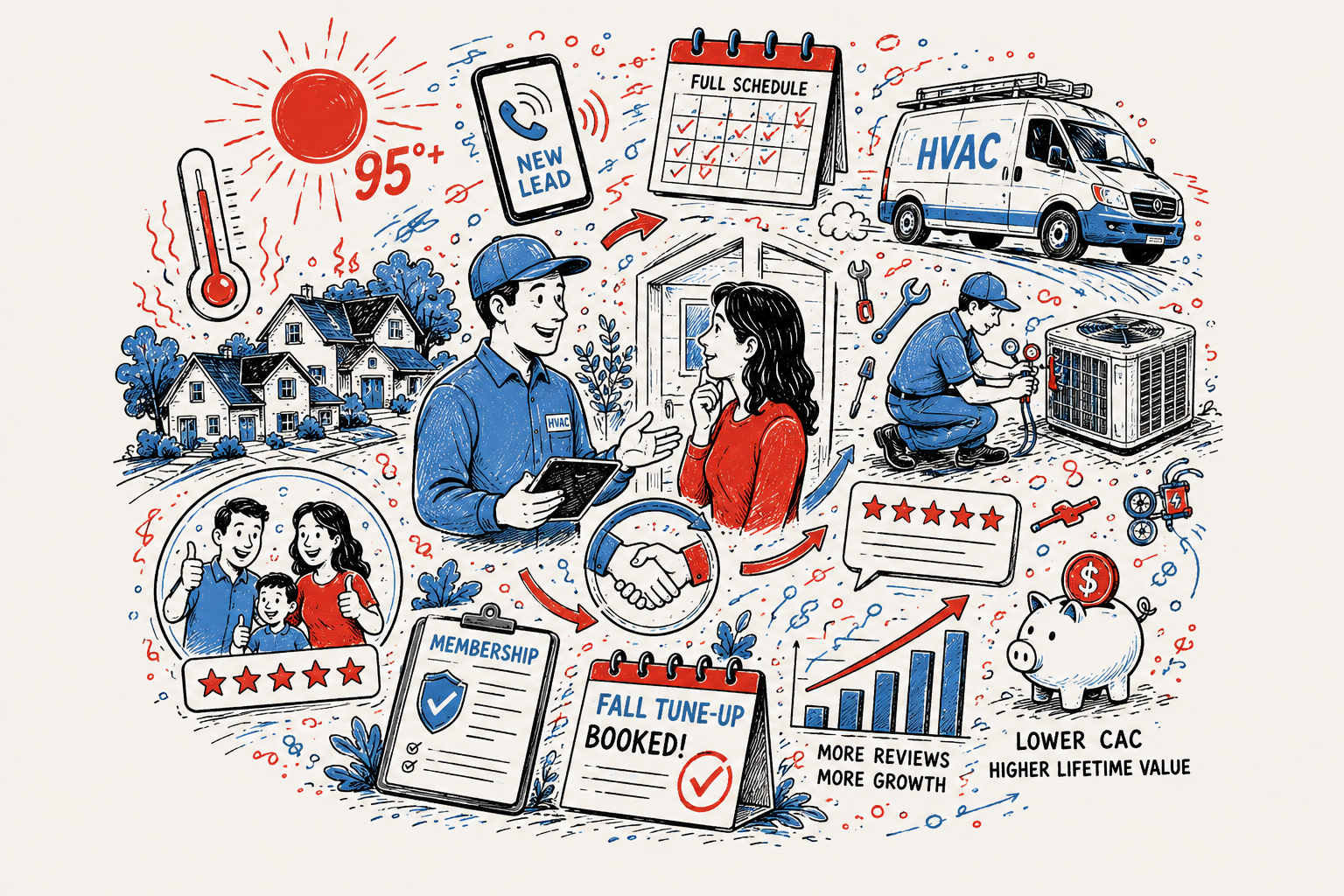
Every spring and summer, HVAC contractors shift into execution mode. Trucks roll, phones ring, technicians run wall‑to‑wall calls. The board fills up...
4 min read

Running a successful maintenance program isn't just about delivering great service. It's also about making sure the agreements behind it are clear, transparent, and compliant with evolving regulations. To help contractors better understand today's auto-renewal requirements, we invited Eric Proos, Founding Partner of Next Era Legal, to share his perspective on the legal landscape and the practical steps HVAC businesses can take to reduce risk while building trust with customers.
.png?width=387&height=387&name=Eric%20Proos%20(2).png)
You signed up a homeowner for an annual maintenance plan last spring. Good customer, no problems.
Then twelve months later your office gets a call.
They are disputing the charge on their card. They say they never agreed to be billed again.
Your service coordinator pulls the contract and the auto-renewal clause is right there on page two, but the customer never noticed it.
Now you have a chargeback, a frustrated customer, and a one-star review in progress.
This situation comes up more often than most contractors expect. Auto-renewal clauses in HVAC maintenance agreements are legally sound and commercially important. The problem is almost never the clause itself. The problem is that the customer did not know it was there, or knew it was there but never got a real heads-up before the charge hit.
That gap, between what your contract says and what the customer actually understood, is exactly where complaints and chargebacks are born. Increasingly, it is also where state regulators are looking.
Before getting into what the law requires, it is worth naming the practical problem clearly.
When a renewal charge catches a customer off guard, you typically face one or more of the following:
None of these outcomes require bad intent. They require only that the customer felt surprised.
Getting the disclosure right is the most direct way to eliminate that risk.
The legal landscape around auto-renewal has changed rapidly.
The FTC finalized a major update to its Negative Option Rule in late 2024 that would have imposed new disclosure, consent, and cancellation requirements on auto-renewing contracts.
However, the rule was vacated by a federal appeals court in July 2025 before taking effect. The FTC has since begun rewriting it.
While there is currently no new federal rule in force, the trend is clearly toward tighter requirements. The FTC continues to bring enforcement actions under existing federal law against companies for deceptive auto-renewal practices.
This is where most contractors currently face legal exposure.
Several states have updated their auto-renewal laws, including:
Although requirements vary, these laws consistently require three things:
State enforcement has increased as well. The common issues regulators focus on are:
Important: Auto-renewal laws vary by state and continue to change. This article is general information only and is not legal advice.
Across complaints and enforcement actions, the same three issues appear repeatedly.
If your renewal language is hidden inside a lengthy service agreement, most customers will never notice it.
Many state laws require disclosures to be clear and conspicuous, meaning they should stand out with:
Several states now require the disclosure to appear near where the customer signs.
Most states require customers to receive advance notice before an annual renewal.
Although the exact timing varies, the principle is consistent:
Customers need enough time to review the renewal and cancel before they're charged.
A reminder arriving one or two days beforehand often isn't enough.
Renewing at the same price is one thing.
Increasing the price creates additional disclosure obligations in many states.
For example:
Burying a price increase inside a general renewal reminder generally isn't sufficient.
The good news is that fixing these issues is straightforward.
Contractors who manage renewals successfully typically follow the same playbook.
Give your auto-renewal terms:
This creates documented consent instead of relying on fine print.
Create a standard process that sends reminders approximately 30–45 days before renewal.
Each notice should include:
Whenever possible, use the same communication channel the customer originally used.
If pricing changes:
Avoid hiding price changes inside general renewal communications.
Maintain records showing:
Good documentation can dramatically simplify chargeback disputes months later.
If customers enrolled online or through email, they should be able to cancel the same way.
Regardless of what your agreement says, difficult cancellation processes create unnecessary risk.
The hardest part of renewal communication usually isn't knowing what to do.
It's doing it consistently across hundreds or thousands of customers every year.
SmartAC helps contractors automate renewal communications by sending documented maintenance-plan notices on the appropriate schedule.
If maintaining this process consistently is challenging for your team, automation can reduce administrative burden while creating a documented communication history.
If your broader concern is contract compliance or legal risk, a fractional general counsel relationship can help ensure your agreements remain aligned with evolving state requirements.
Auto-renewal is good for both contractors and customers when handled correctly.
Most disputes don't happen because auto-renewal exists.
They happen because:
The contractors who avoid these problems typically have:
If your maintenance agreement hasn't been reviewed recently, it's worth taking another look. The legal landscape shifted significantly in 2025, and agreements that were sufficient a few years ago may now have compliance gaps.
The team at Next Era Legal works with HVAC contractors on service agreement compliance, including auto-renewal disclosures and consumer protection requirements.
If you'd like a second set of eyes on your maintenance agreement before your next renewal season, consider scheduling a consultation.
Schedule a Consultation: nexteralegal.com
This article is for general informational purposes only and does not constitute legal advice. Auto-renewal laws vary by state and continue to evolve. HVAC contractors should consult with qualified legal counsel regarding the specific requirements applicable to their service agreements and markets.
Every spring and summer, HVAC contractors shift into execution mode. Trucks roll, phones ring, technicians run wall‑to‑wall calls. The board fills up...
Here's what actually happens when a tech drops the price to close a job. It feels like a sales decision in the moment. The customer hesitates, the...

Many HVAC contractors are expanding into electrical services to diversify revenue. But HVAC membership programs and service agreements may offer a...