



What Rising Equipment Costs Mean for Your HVAC Business (And the Upside Nobody's Talking About)
If you've been sticker-shocked at the supply house lately, you're not alone — and you're not imagining it. Equipment costs are up, material prices...
5 min read
Why a strong membership base does the selling before you ever step foot in the home
Every HVAC contractor knows the feeling: the phone rings, the tech comes back with bad news, and suddenly you’re looking at a five‑figure ticket. In many markets, a full residential system replacement easily lands in that range, often somewhere between $7,000 and $18,000 depending on the home, equipment, and scope of work. It’s the kind of job that can turn a slow week into a strong one and a solid month into an exceptional one. It’s also, for many contractors, the thing quietly undermining their long‑term growth.
The pattern is common enough that you can spot it from a distance. A contractor gets good at sales, really good - and starts converting replacements at a high clip. Revenue climbs. The pipeline looks healthy. Then, six months later, the shoulder season hits and the phones go quiet. The problem isn’t the market. It’s that the customer base has been mined instead of cultivated.
Replacement revenue is real and meaningful. But it’s a one‑time event in what could be a 10‑to‑15‑year relationship with a homeowner’s system. A homeowner whose system was just replaced isn’t going to need another one for a decade under normal circumstances. If the only touchpoint between now and then is a tune‑up they feel pressured to schedule, there’s a good chance someone else gets that next call.
For many contractors, a single homeowner relationship can be worth tens of thousands of dollars over its lifetime once you add up maintenance agreements, repairs, IAQ upgrades, and eventual system replacements. That potential only materializes if the relationship holds. And relationships don’t hold on their own - especially in a market where there are around 120,000 heating and air‑conditioning contracting businesses in the U.S., and a competitor is always one Google search away.
Across service businesses, most customer losses stem less from price and more from a slow erosion of the relationship. Customers don’t necessarily leave because something went terribly wrong; they leave because it doesn’t feel like anyone is paying attention. In HVAC, that dynamic shows up as the homeowner who “forgets” you exist until the next breakdown - and by then, they may be calling someone else.
Contractors who build durable businesses tend to see memberships differently than contractors who are still chasing the next big ticket. The replacement is the outcome. The membership is the mechanism that delivers it.
Maintenance agreement customers behave differently than one‑time service customers. In many contracting businesses, members renew, schedule, and buy at much higher rates — often approaching double the retention of general service customers — because they have a formal relationship with your company and expect to hear from you regularly. When something goes wrong, they’re not starting a shopping process; they’re calling the contractor already in their phone.
The economics reinforce this at every level. Maintenance agreements create scheduled touchpoints that naturally surface repairs, add‑ons, and replacement conversations over time, and in many shops the revenue generated from that “pull‑through” work rivals or exceeds the value of the contract itself. At the same time, broad research shows that acquiring a new customer often costs 5–25 times more than keeping an existing one, and existing customers convert at 60–70% versus 5–20% for new prospects. In HVAC terms, every membership renewal is quietly lowering your overall cost to generate profitable work.
When replacement time does come, the close rate for members is dramatically higher — not because of a clever in‑home pitch, but because the trust is already there. The contractor who’s been maintaining the system, flagging issues early, and showing up consistently has already done the selling. The replacement is just the next logical step.

The 2020–2022 period was unusually kind to contractors who leaned into replacements. Financing was accessible, equipment demand was high, and homeowners had money,or stimulus - to spend on big home upgrades. Many contractors who had built strong membership bases started converting those members into replacement customers at an accelerated pace.
On paper, it looked like growth. In some ways, it was. But it also burned through the relationship pipeline that had taken years to build. As the market has normalized and homeowners have become more price‑sensitive, industry observers have noted a shift from big replacement cycles toward more repair‑oriented demand and slower replacement growth. Contractors running purely reactive repair businesses have watched margins thin and customer lists stagnate. The ones who had prioritized memberships had a buffer. The ones who effectively cashed out their membership base for short‑term replacement revenue are now having to rebuild those relationships from scratch.
The lesson isn’t that replacements are bad. It’s that for every replacement you sell, you need a relationship in the wings — ideally one you’ve been nurturing for years.
What closes the gap isn't a better script. It's a set of processes that run independently of whether a tech remembered to mention something or a CSR had time to make a call.
That means automated maintenance reminders tied to actual scheduling — not a generic email blast, but a prompt that moves a customer toward booking. It means renewal workflows that surface the customer before the lapse, not after. It means keeping the contractor present in the homeowner's life between visits, so the membership feels active rather than invisible.
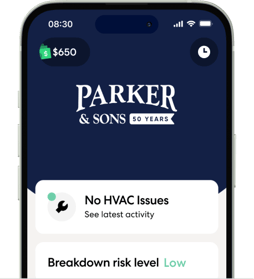
Some contractors are extending this further by putting a white-labeled app in the homeowner's hands — something with the contractor's branding, not Google's search results — where the customer can request a filter, see upcoming visits, or get notified when something in their system needs attention. The practical effect is that the homeowner's next interaction is with the contractor's brand, not a competitor's ad.
Tools like SmartAC are built specifically for this layer — automating the reminders, scheduling triggers, and customer touchpoints that keep membership programs from quietly bleeding out between visits.
The contractors who consistently win replacement work aren’t the ones delivering the most aggressive in-home presentation. They’re the ones who have built enough trust, over enough time, that the replacement conversation feels like a natural next step rather than a high-pressure sales call.
If you want high renewal rates and strong lifetime value, you can’t go silent once the customer signs up. The membership sets the table. Consistent, low-pressure contact keeps the relationship alive. And when the system that’s been limping along finally gives out, there’s no big decision to make - the homeowner already knows who they’re calling.
That’s where SmartAC fits naturally into the picture. Contractors can use SmartAC to stay connected between visits, surface issues earlier through monitoring, and give homeowners a clearer view of what’s happening with their system before a breakdown turns into a rushed decision. Instead of relying on one high-stakes replacement conversation, the contractor is building trust over time through useful, proactive touchpoints.
In a market with roughly 120,000 heating and air-conditioning contracting businesses in the U.S., the companies that win long term are the ones that stay relevant between service calls, not just the ones that close hard in the home. When that relationship is in place, replacements don’t have to be chased nearly as hard — they tend to come through the trust that’s already been built.
This post was inspired by a conversation on the Beyond the Truck Roll podcast with Bill Brown, a former HVAC contractor who built and sold a $4 million residential business before going on to found Service Titan Hacks. Bill's perspective on memberships, short-term thinking, and what it actually takes to build a durable customer base shaped a lot of the thinking here. If you want to hear it directly from someone who's lived it, the full episode is worth your time.
SmartAC empowers HVAC service providers with smart monitoring, real-time analytics, and a seamless homeowner engagement experience designed to fuel long-term business growth. Book a demo or explore the platform to see what it can do for your business.
If you've been sticker-shocked at the supply house lately, you're not alone — and you're not imagining it. Equipment costs are up, material prices...
While headlines are flooded with stories about AI threatening white-collar jobs, a landmark new report from Anthropic — the company behind the Claude...
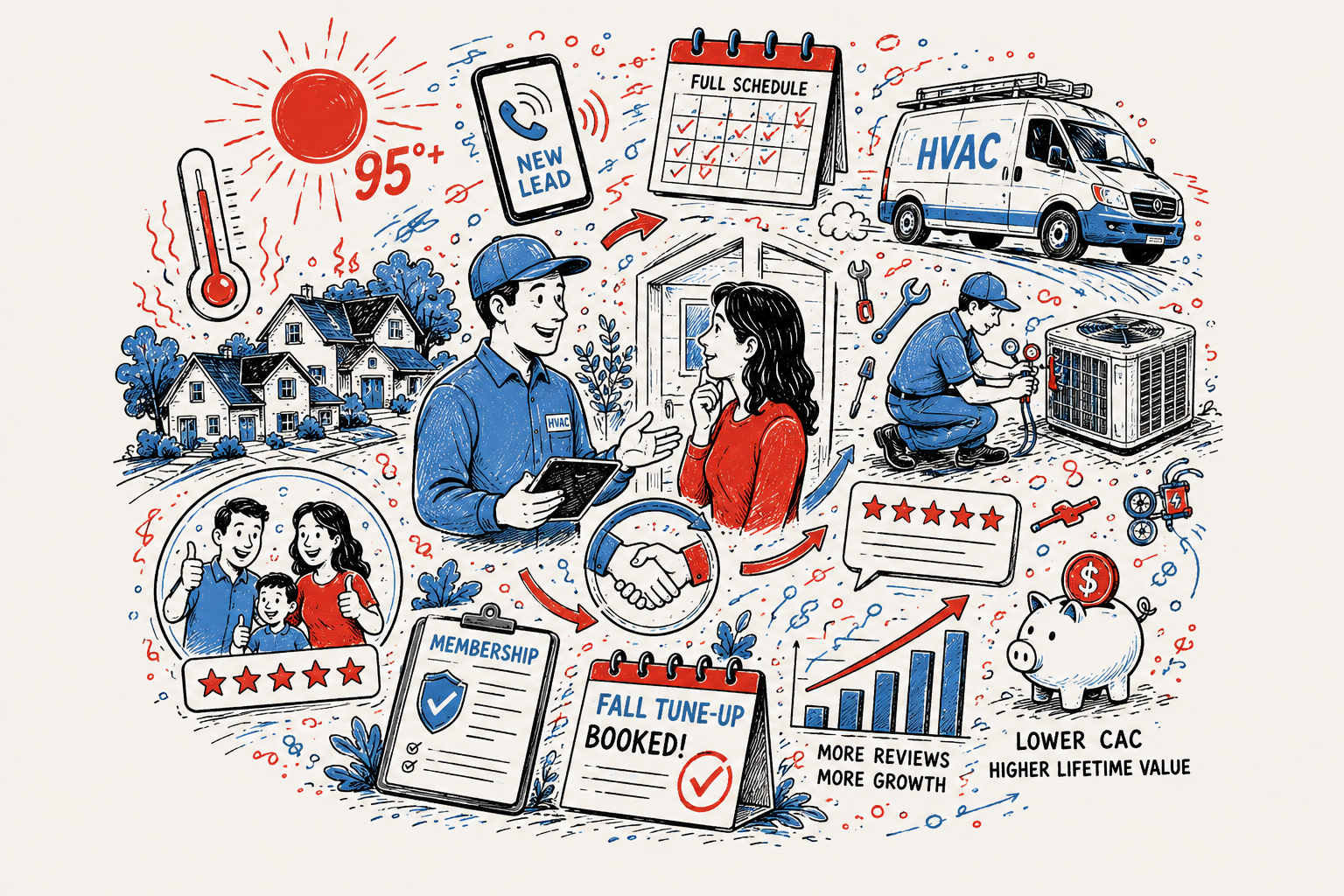
Every spring and summer, HVAC contractors shift into execution mode. Trucks roll, phones ring, technicians run wall‑to‑wall calls. The board fills up...