



What Rising Equipment Costs Mean for Your HVAC Business (And the Upside Nobody's Talking About)
If you've been sticker-shocked at the supply house lately, you're not alone — and you're not imagining it. Equipment costs are up, material prices...
5 min read

In March 2026, Anthropic released its "Labor Market Impacts of AI" report — one of the most comprehensive studies of real-world AI adoption ever published. Rather than relying on theoretical guesswork, the researchers analyzed actual Claude usage data across roughly 800 occupations to measure which jobs are genuinely being automated right now.
The answer for HVAC contractors is clear: Installation & Repair occupations rank among the least AI-exposed jobs in the entire U.S. economy, with only 22% observed AI exposure. Construction came in even lower at 18%.
Compare that to professions feeling the real squeeze — computer programmers at 74.5%, customer service representatives at 70.1%, and data entry roles at 67.1% — and it's clear which side of the divide HVAC technicians are on.
Why are trades so resilient? According to the report, it comes down to what AI fundamentally cannot do: physically show up, adapt to an unpredictable environment, and earn a homeowner's trust in real time. Every attic is different. Every refrigerant leak has its own story. Every customer needs a human being to explain what's wrong with their system in plain language — and then actually fix it.
AI can't climb into an attic. That's not a consolation prize. That's a structural competitive advantage.
Here's where the story gets even better for contractors.
While AI is automating tasks in office towers and call centers, it's simultaneously demanding an enormous buildout of physical infrastructure — and that infrastructure runs hot. AI data centers require massive, sophisticated cooling systems, and the demand for HVAC engineers and technicians to build, install, and maintain them is exploding.

According to a global analysis of 50 million job postings by staffing firm Randstad, demand for HVAC and cooling system engineers grew 67% between 2022 and 2026 — the second-fastest growing skilled trade category tracked. Meanwhile, BlackRock recently announced a $100 million investment in skilled trade training programs, explicitly naming HVAC technicians as a hiring priority.
NVIDIA CEO Jensen Huang put it plainly: "AI factories need electricians, plumbers, pipefitters, steelworkers, network technicians, installers and operators. These are skilled, well-paid jobs, and they are in short supply."
The AI boom isn't coming for HVAC jobs. It's creating more of them.
This surge in demand is good news — but it also raises the stakes for how HVAC businesses are run. More calls, more installs, and a tighter labor market mean that operational discipline has never mattered more.
Top-performing contractors in today's market are doubling down on the fundamentals:
Maximizing every call. A structured call-by-call process — where technicians focus on diagnostics and relationship-building while separate sales support handles pricing conversations — consistently produces more installs without pressure or guesswork. Every service call treated like it's the only one of the day.
Staying connected to their customer base year-round. HVAC businesses sitting on databases of thousands of customers are leaving significant revenue on the table if they're only reaching out when something breaks. The contractors winning right now are reaching customers quarterly — not with sales pitches, but with genuine value: filter change reminders, pre-season prep tips, storm debris checks.
Scaling maintenance agreement retention. Maintenance agreements are the most reliable revenue stream in the business, but they require consistent customer touchpoints to grow. The contractors who have cracked this are the ones who feel least exposed when shoulder seasons hit — and they're doing it by making their membership programs genuinely worth staying in.
Protecting the trusted advisor role. Homeowners are increasingly researching HVAC systems online and even using AI tools mid-appointment. The contractors who win long-term are the ones who build genuine trust — showing up on time, presenting options clearly, and treating every customer's home like it matters.
Here's the nuance that often gets lost in the "AI vs. trades" conversation: the goal isn't to replace technicians with technology — it's to help technicians do what they do best, more consistently.
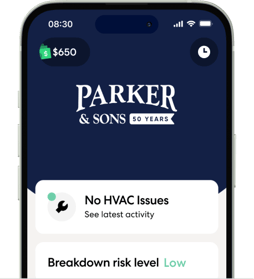
That's exactly what SmartAC's HVAC monitoring and membership growth platform is built for. SmartAC's smart sensors monitor heating and cooling performance 24/7, surfacing issues proactively before homeowners even notice — and giving contractors a natural, value-first reason to reach out between service visits.
The results speak for themselves. Iceberg Home Services, a Florida-based HVAC contractor, embedded SmartAC's monitoring system directly into its membership program — and within the first year, drove a 30% increase in memberships, generated $80,000 in new revenue, and saw 82% of existing members upgrade to a SmartAC-enabled plan. They also raised annual membership pricing by 33% — from $225 to $300 — and customers accepted it, because the value was undeniable.
"Instead of waiting for something to break, we're able to reach out first, solve problems earlier, and give homeowners peace of mind," said Sydney Biancardi, Director at Iceberg Home Services. "SmartAC didn't just give us technology — it helped us build a culture around memberships and proactive service."
That shift — from reactive service to proactive, year-round customer engagement — is precisely the model that separates contractors who thrive from those who stall. And it's the kind of positioning that no amount of AI disruption can touch, because it's built on human relationships backed by real data.
Want to see what this looks like for your business? Book a demo or run your ROI to model what membership growth could mean for your revenue.
If you're an HVAC contractor, here's the simple takeaway: the trades are not just surviving the AI era — they're benefiting from it in ways that were hard to predict even two years ago. Demand is rising. Labor is in short supply. AI can't replace what your technicians do. And the market is rewarding contractors who combine field excellence with smart customer relationships.
The businesses that will look back on 2026 as a turning point are the ones investing in their processes, their people, and their customer relationships today.
The window is open. The only question is whether you're positioned to walk through it.
Will AI replace HVAC technicians? No — and the data backs it up. Anthropic's 2026 labor market report found that Installation & Repair occupations have only 22% observed AI exposure, one of the lowest rates of any occupational category in the U.S. HVAC work requires physical dexterity, real-time problem-solving in unpredictable environments, and hands-on customer interaction that AI cannot replicate.
Is AI creating demand for HVAC workers? Yes. The buildout of AI data centers is driving a 67% surge in demand for HVAC and cooling system engineers, according to Randstad's analysis of 50 million global job postings. AI infrastructure runs hot and requires sophisticated cooling — which means more work for HVAC contractors, not less.
What should HVAC contractors focus on in the AI era? The contractors winning right now are the ones building year-round customer relationships — not just showing up when something breaks. Scaling maintenance agreements, staying in front of customers between service calls, and using smart monitoring technology to surface issues proactively are the strategies separating high-growth operators from those stuck in a reactive service model.
How does SmartAC help HVAC contractors grow in this environment? SmartAC gives contractors 24/7 visibility into how their customers' systems are performing — surfacing issues before they become emergencies and creating natural, value-driven reasons to stay connected between visits. Contractors like Iceberg Home Services have used SmartAC to grow memberships 30% year over year and generate $80,000 in new revenue in the first year. Learn more at smartac.com/why-smartac.
SmartAC empowers HVAC service providers with smart monitoring, real-time analytics, and a seamless homeowner engagement experience designed to fuel long-term business growth. Book a demo or explore the platform to see what it can do for your business.
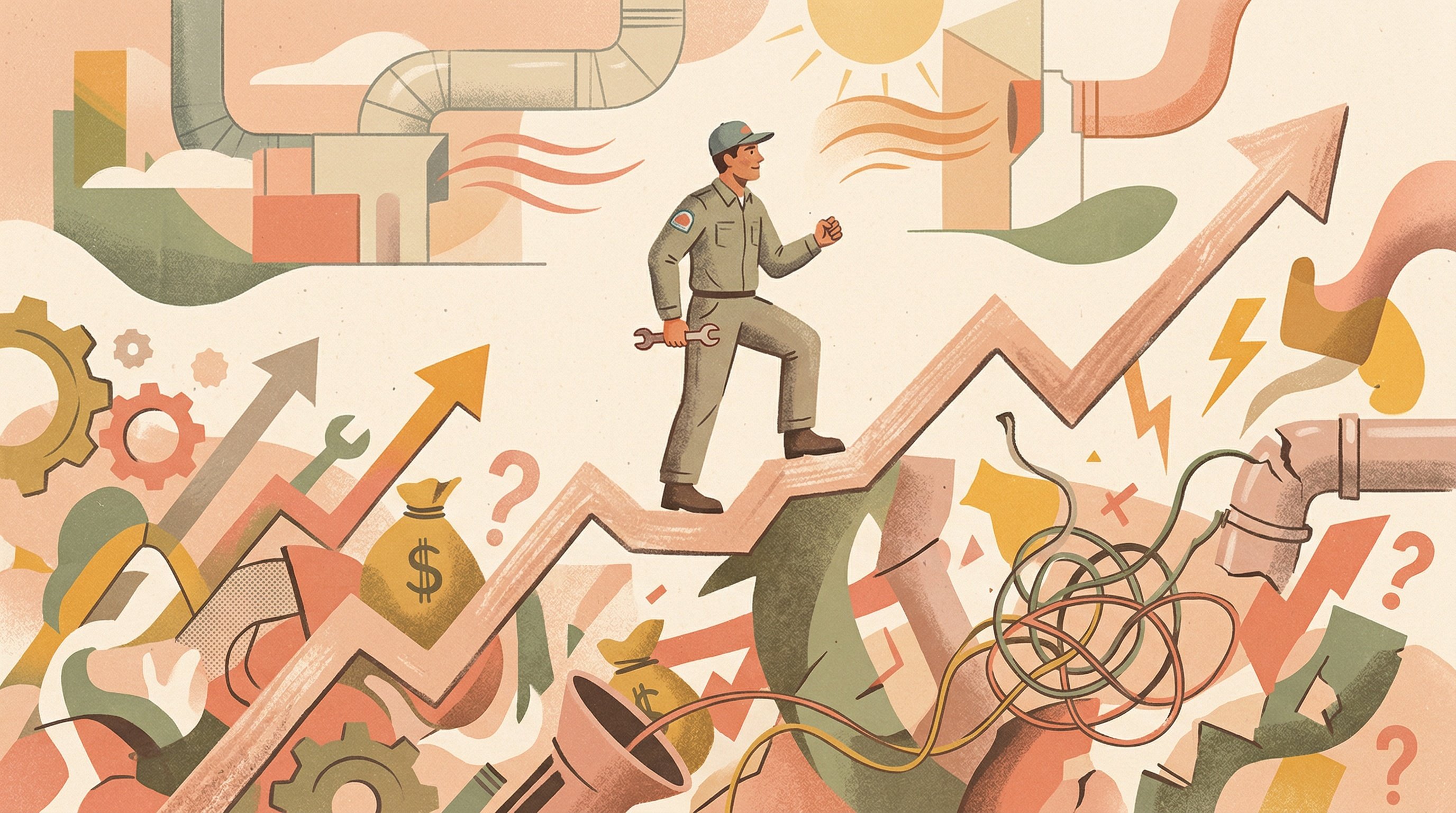
If you've been sticker-shocked at the supply house lately, you're not alone — and you're not imagining it. Equipment costs are up, material prices...
The future of AI in HVAC is not a technician-free service department. It is a technician arriving with intelligence they did not have before. AI...

Many HVAC contractors are expanding into electrical services to diversify revenue. But HVAC membership programs and service agreements may offer a...